Progressive metal isn’t an easy place to be. Let’s face it, much of the world of progressive metal is a tussle between an old guard of old fans (the Neanderthals of Metal) who really like bands that sound like Dream Theater, Queensryche, and so forth, and then there’s kind of everyone else. It’s disparate, difficult to define and often pretentious as hell with little logic as to what is in fashion with which group. This is the natural outcome of genrefication, in my opinion, and part of that is a question of where a band can actually progress to. You’re either not heavy enough or you’re too heavy and you never please anyone. Few bands ever really manage to fall outside of these well-worn ruts in the road, but there are some fantastic bands in those ruts—Aspera is one of those bands.
Aspera is not like much of the progressive metal that’s coming from Norway (which is where they’re from incidentally), but instead they sound a lot like Symphony X. This will not be the last time I say that—because Aspera sounds like Symphony X. Like, almost exactly like Symphony X. The music is great, heavy and riffy. The band is tight, with great keyboards and a lead guitarist that is just a hell of a player. The guitars and keyboards work together really well and are balanced out by a very excellent rhythm section. Like Symphony X, the writing is intelligent with excellent transitions, good dynamic movements, beautiful choruses and solid hooks litter every song. The choruses are amazingly catchy and will definitely get stuck in your head, and yet the arrangements of the songs are still progressive enough to make you feel nice and superior to your buddies who listen to non-prog bands. On top of all of that the record is beautifully produced—done by the marvelous Jens Bogren (Opeth, Ihsahn, Symphony X, etc.)—everything is neatly organized, tight as hell and the tone is really fantastic.
OK, so what are the problems? Well, I suspect that you probably already sense an issue. When the band’s bio says that the band “quotes bands like Pagan’s Mind, Pain of Salvation, and Symphony X” it’s actually a really nice way of saying “Aspera sounds like progressive metal, you know, progressive metal like you’ve heard before.” And while this is good in some ways, it feels comfortable, it also draws the listener back from the tracks thinking “Huh, don’t I know that riff?” Another major weakness is the vocalist. Unlike many progressive bands, singer Atle Pettersen isn’t a straight up bad vocalist. Instead, he’s a poseur. His performance on the record is spotty because he is at his roots a talented, choir boy singer who is trying his hardest to sound rock ‘n roll. Something his voice doesn’t have—and something that makes him a unique voice in my opinion. In a genre overrun with Rob Halford, Bruce Dickenson and Geoff Tate wannabes, Pettersen has a clean, clear voice that is strong and recognizable without needing to fake balls. Unfortunately, for whatever reason he has decided that in order to be a rock vocalist he has to have a wail and it makes him sound weak and silly, not tough and strong like he intends.
Another interesting point, which drops this record down a bit for me, is that the lyrics are not good. The Steve Harris School of Lyrics Writing is apparently still open in Scandinavia and whoever is writing the lyrics for Aspera has taken all his notes directly from these guys. There is no subtlety, hardly any poetry and nothing remotely new or interesting in them. Lyrics in metal tend to range between the unfortunately bad and the passable, rarely ever being good, and for Aspera, a reading list of good poets and lyricists might be in order. To be frank, I can understand why so many power and progressive metal bands have begun writing thematically (stories, concept records, etc.) because this record which seems a bit more personal, is really just filled with rock clichés.
In the end, however, Ripples indicates what I see to be a bright future for this band of Norwegian youngsters. This is their debut record and they make a really good show of it with catchy tunes, smartly written tracks and they’re tight, tight, tight. One hopes that they begin developing some personality, working on convincing their vocalist that he isn’t Russel Allen and keeps fighting on. These guys have a bright future ahead of them if they can keep it together.
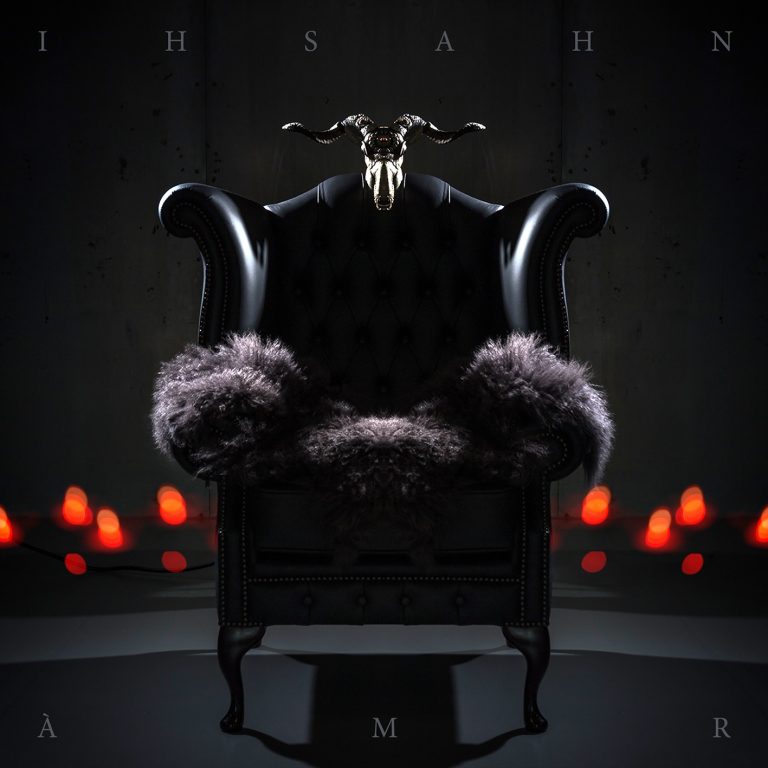
Ihsahn // After Rating: 3.5/5.0 — Very good, but not as compelling as angL Label: Candlelight Websites: ihsahn.com | myspace.com/ihsahnmusic Release Dates: EU 25.01.2010 | US: 01.26.2010
Easily one of the most anticipated records of 2010 for me has been Ihsahn’s new offering. While I was a passing Emperor fan, really just a fan of In the Nightside Eclipse and Anthems to the Welkin at Dusk-era, I was taken by Ihsahn’s solo stuff. The Adversary felt fresh—progressive enough, a step away from the later Emperor material of which I wasn’t a fan—and it captured the sonic styles and textures that he was never quite allowed to explore while in Emperor. The record didn’t stick with me as I had hoped, while I listened to it occasionally it didn’t hold a steadfast position in my discography. On the other hand, angL blew me away. Probably the finest record of 2008, angL has maintained a steady place in the rotation and is a record that I’ve showed to dozens of people. Perfectly produced, perfectly composed and smartly written, angL contained everything that I wanted out of a new progressive metal record. So, of course, when I heard that Ihsahn would be releasing a new record in 2010, I became justifiably excited.
After, the third album in Ihsahn’s initial trilogy, has once again separated itself from the pack and from Ihsahn’s earlier work—something that the man seems compelled to do with every release. The first album composed primarily for his new 8 string guitars, Afterpossesses a more organic sound than the earlier two albums. While the style hasn’t changed dramatically—if you’ve heard the first two albums, you certainly would recognize it as Ihsahn—the composition feels less tightly contained and controlled. The addition of saxophone to certain tracks also offers a more natural dimension to the music, similar to that of the excellent Solefald, and the saxophone is also relatively unconstrained, unpredictable and has the sound of being highly improvised.
That Ihsahn is a fantastic writer is undisputed, but how well this record plays with you probably depends on your personal tastes. The first half of After plays very similarly to his earlier material; black metal influenced progressive metal with excellent riffing, smart transitions and some acoustic parts. This culminates with track “Frozen Lakes on Mars,” which might be the best on the album, before continuing into the second part of the album. The track “Undercurrent” marks the halfway point (trackwise, as it’s track 5) and where this album started to transform to a slower, more progressive album. The riffing and writing loses some of its crispness on the second half of this album—particularly on “Undercurrent” and “Austere” which are both quite slow—and, instead relies on atmosphere, texture and feel. By the time one makes it to “Heaven’s Black Shore,” after the 16 minutes of down time, the record seems to have lost a little bit of its punch. The last two tracks are great, though again a little bit more plodding than the earlier material and the whole album comes to a major epic close that is worth the wait. How this will play definitely depends on what you like about the earlier Ihsahn material, I think. If you’re a fan of more atmospheric black metal, bands like Shining, Solefald, or even something like Wardruna (or from a totally different angle, if you’re a big fan of 70s prog and neo-prog like Opeth, Porcupine Tree, etc.) you’ll probably appreciate these things musically. If you’re more of a fan of the technical, fast, groovy, structured Ihsahn stuff—well, then this might take some time to grow on you if it ever grows at all.
There is always a danger in re-inventing your sound, and while this record is good, it just doesn’t live up to standard of what I was expecting after angL. That said, I would still recommend this album to others because it’s still heads and shoulders above a lot of the stuff that’s being released today. The musical performances are amazing: the rhythm section (Asgeir Mickelson & Lars Noberg from Spiral Architect) is tight and tremendously talented. The saxophonist (from the Norwegian Shining) offers a stellar performance and production and mix is also tight, clean and clear without feeling sterile. Musically, the record is still epic and compelling for the most part and it shows just how multi-dimensional Ihsahn is as a writer and performer. The question for fans is, of course, what comes after After?
Wow. Things have been busy around here, honestly. One of the downsides of doing this for fun is that one makes no money doing it and has to come up with other ways to pull together an income. I’ve been trying to do that, plus, other things. Anyway, this is the stuff that I’ve been up to and listening to in my freetime (of which there is actually very little). In this time, however, I have pieced together a list that I would call the “best albums of the 2000s.” I don’t know if I’d actually call them the best, so much as the ones that have really stuck with me. As a guy who thinks that it was actually the mid/late 90s that were really the defining point in heavy metal for the modern era, and that what we’re dealing with is very much the outcome of this, this list was actually very difficult for me to produce.
1. Opeth // Ghost Reveries — This is always the toughest for me. Choose which Opeth record I think most defines the modern era. I finally always decide on GR, which incidentally I hated when it came out. But it totally grew on me after that and now it’s probably my favorite.
2. Katatonia // Last Fair Deal Gone Down — Again, this is tough. I love all of their modern stuff, but I think this is probably the most consistent of all their albums. Another defining record in my life, I think, too.
3. Turisas // The Varangian Way — I consistently come back to this record over and over. It pretty much represents everything that big, awesome extreme metal should be. I also think it was very much new. It combined much of that power metal and viking metal stuff that’s been threatening to merge for years into a cohesive whole.
4. Vintersorg // Visions from the Spiral Generator — Again, how do you really choose? I chose this one because I think the whole album is fantastic. But they’re all fantastic. It’s definitely between this one and Cosmic Genesis. I chose this one ’cause I love Digorgio and Mickelson’s performances.
5. Amon Amarth // Versus the World — Again a hard one to choose. But this record has some of the best tracks these guys ever wrote and some of the best melodic death metal ever.
6. Anathema // A Fine Day to Exit — This record is fucking tremendously written and perfect from first note to last note.
7. Amorphis // Eclipse — The rebirth of Amorphis is quite possibly one of the greatest things that happened in the two-thousandsies. This album, and the two that have followed since, are some of the finest metal records produced in the modern era.
8. Rhapsody // Power of the Dragonflame — Sets the bar for orchestrated, ridiculous over-the-top metal. They’ve never produced anything like it since, nor has anyone else for that matter.
9. Ihsahn // angL — I love Ihsahn’s solo stuff. It’s a perfect blend of extreme metal and prog. His writing is massively improved since being out of Emperor, in my opinion, but I’m sure there’s a black metal guy on this board who will shriek in horror at those words.
10. Shining // V:/ Halmstad — This record hooked me immediately and hasn’t let go.
You have absolutely no idea how difficult it is to write a list like that. And I do really like writing lists, I think it’s a good time. A game for me has always been top 5s or top 10s.
We’ll start with a simple link. The new track from Ihsahn’s forthcoming record After, which is the thing I’m looking forward to most in 2010 (along with the new Vintersorg).
The song is GREAT. The production and mix is really solid, and the song itself is delightfully progressive. I can easily say that Ihsahn is the best solo project by any musician pretty much ever.
Ihsahn has posted a new video entry from the recording process online. While very, very boring from the perspective of these kinds of videos (it doesn’t like when it says WARNING: This video contains no enthusiasm or excitement of any kind) it is, on the other hand, awesome to watch him play and great to hear where After is headed musically. That is, it sounds fucking awesome and I’m super stoked about it.
As reported earlier, this record is scheduled to be released in January of 2010, making the new year look very exciting from my perspective.
OK, according to a clarification that I got from Candlelight, Ihsahn’s new record isn’t coming until January of 2010. Lame. I was really excited about the October 2009 date, but apparently the Candlelight got it wrong on their website (which I checked and which said (and still says), and I quote:
Ihsahn-After CANDLE288CD 19/10/2009
Progressive Metal
So yeah, don’t blame me. I was just reporting what they had written. Anyway, now October is less fun.
October is going to be a very good month! Why is that? Because not only do we get a new record from Hypocrisy as already mentioned but Ihsahn, the very excellent ex-front man from black metal legends Emperor (as if you didn’t know that) is going to be releasing his own new record! Color me fucking stoked! I hadn’t expected that at all! Anyway, let’s hope it lives up to angL, which was easily my favorite album from 2008. Now if only Candlelight would add me to their promo list so that I can get a copy and do an interview with the genius himself!! Mark down October 19th on your calenders, I know I will.