Aug 3 2010

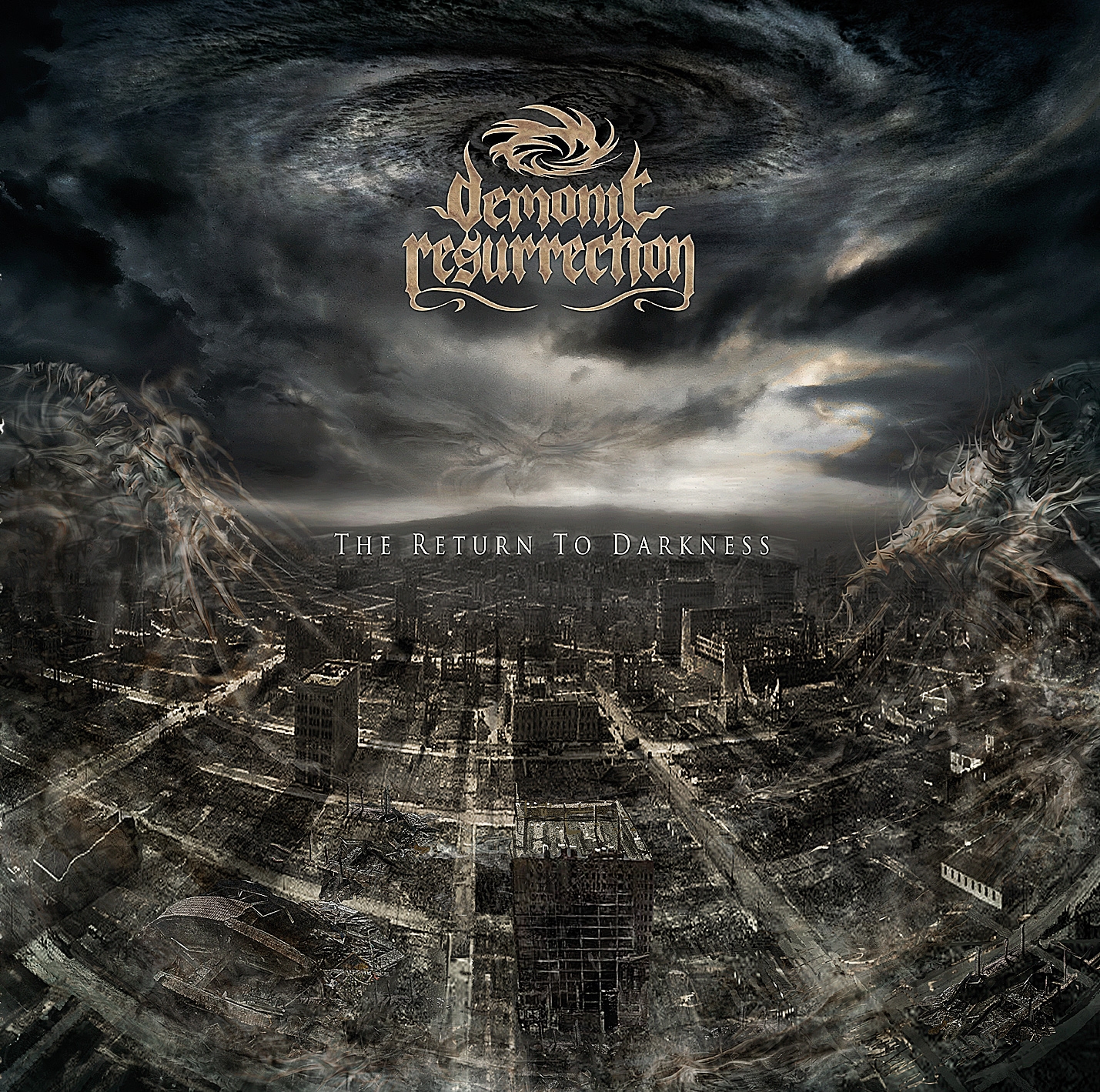
Demonic Resurrection – The Return to Darkness Review

Angry Metal Guy

Demonic Resurrection // The Return to Darkness
Rating: 3.0/5.0 — Fundamentally good…
Label: Candlelight Records
Websites: demonicresurrection.in | myspace.com/demonicresurrection
Release Dates: EU: 02.08.2010 | US: American release date unknown

As world metal takes the stage, something that is happening more and more frequently these days, we’re going to be seeing more of these bands coming from places where metal just hasn’t ever shown its face earlier. Demonic Resurrection, as those of you familiar with Sam Dunn’s documentary Global Metal already know, are a band from India who play symphonic black metal. The third record in a trilogy The Return to Darkness is being released (as I understand it) as the band’s first international release via Candlelight Records. That Sam Dunn is a rockstar creating machine, it turns out. Though, when it comes to Demonic Resurrection, their music speaks for itself and if you give that music a stage that myriads of metalheads have access to, it’s not hard to see how they managed to break beyond their borders. Continue reading
Like this review or article? Hate advertisements? Buy me a beer to show your appreciation for it (and to keep me too drunk to sign the advertising contracts). $5 for a glass and $10.00 for a pitcher are my helpful suggestions.


Feb 9 2010

Kobi Farhi Interview

Angry Metal Guy

For anyone who has regularly read my site, it is pretty obvious that I am a big Orphaned Land fan. So it is no exaggeration to say I was pretty stoked to do an interview with the band’s vocalist, lyricist and gigantic personality, Kobi Farhi. We had a chance to talk about several different things, ranging from the cultural approach to metal in Orphaned Land to working with Steven Wilson (from Porcupine Tree). For the first time I am going to offer the audio of this interview edited down with some clips from the record, as well as typing out the “transcript” as it were. The transcript, of course, will have the full text and the audio is a bit more edited down so as to cut out the BS.

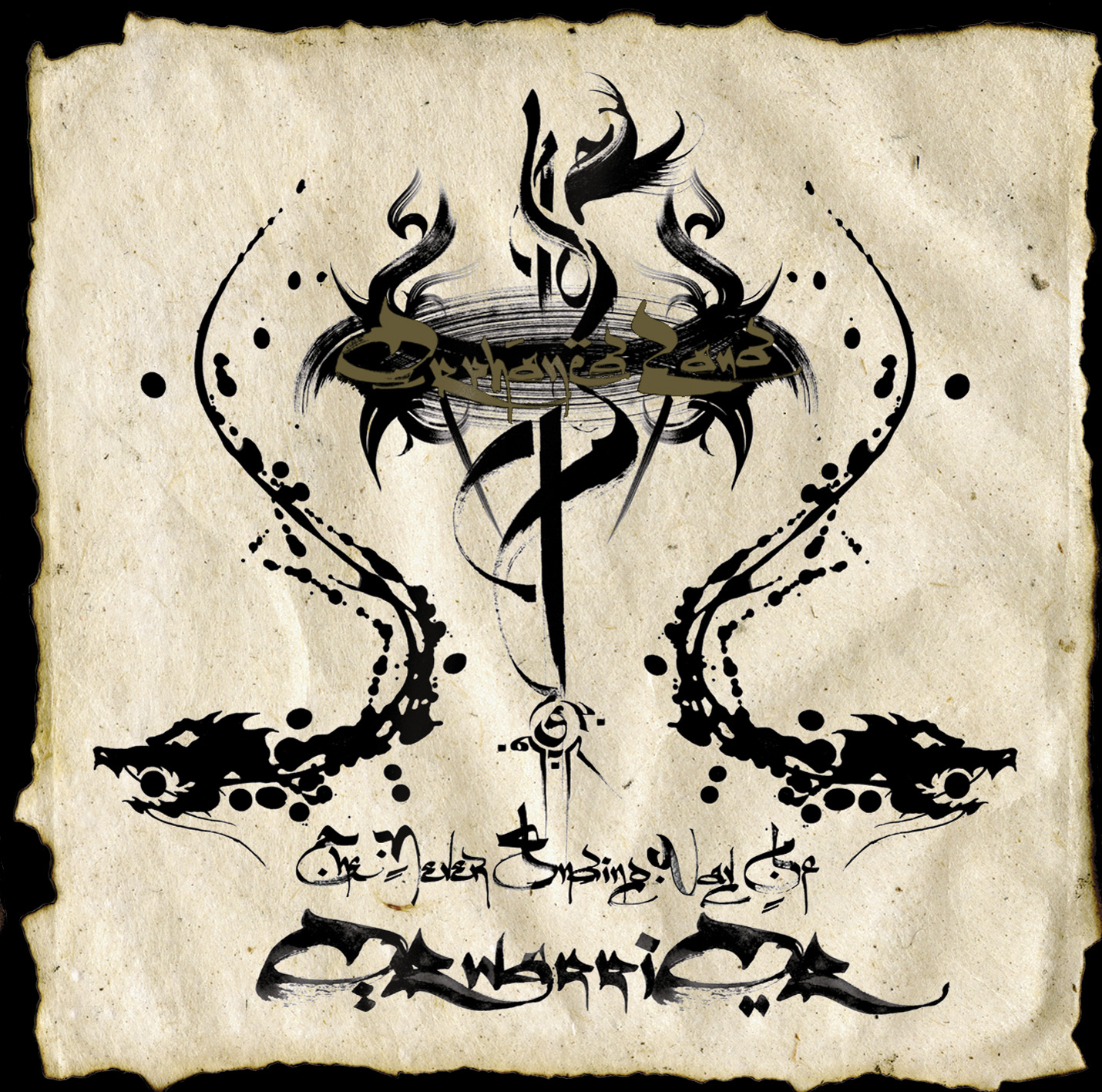
Orphaned Land formed in 1992 as Resurrection, however the band changed their name early on. Since then they have produced one demo and four full length albums, including 2010′s The Never Ending Way of ORwarriOR. The band has major middle eastern influences and is well known (maybe infamous?) for taking huge amounts of time between records. However, this quantity deficit is offset by the quality of their releases.

AMG: Why don’t you give us an introduction?

Kobi: I’m the vocalist of Orphaned Land for the last 18 years. This is mainly what I do and Orphaned Land is like my project life for me and for most of the band members because we are all into music but much more than that when it comes to the concept of the album and stuff like that. So we are very much devoted to what we do. [We] come from the Middle East which is a lot of the time a very tragic area for so many people so this is like some kind of mission that we have here as musicians. I’m 34 years old, living in [inaudible] which is very near to Tel Aviv. And that’s right about it.

AMG: You said you were the vocalist for 18 years, but you guys have had like what, 4 studio records now?

Kobi: We had a demo and this is like the fourth album, yes. It takes us pretty much time to release an album but when we do it, I mean, it’s a big celebration for fans and everything because everybody is like waiting for our album approximately five to six years. I guess it’s an outcome of living in our area, which is very diverse and complex and so is our music. We never deliver an album of like 35 minutes or 40 minutes it’s always like above the one hour [mark]. The latest album is 78 minutes long. It’s very complex and diverse and full of layers and stuff and maybe those are the reasons altogether why it takes us this long to come with an album.

AMG: So how does the writing process start? Who is the spark for that or do you guys write separately and bring things together?

Kobi: We have a very strange way of working, I always love to call it the puzzle formula. We always collect the material like guitar riffs but we never write a song. It’s always like a bank of riffs. It could’ve been written on several instruments and everybody composes, I mean, even if I don’t play guitar I have material that I compose and I make sure to record myself singing or stuff like this for example. We always find a concept or a theme that we want to speak about and once we have this concept we start to divide the story conceptually speaking to some kind of chronological parts of the story. Like if we were making a film for example or a script. And according to that we are starting to build, we go to the bank of our riffs and we start to build the music putting the riffs in like pieces of a puzzle. So if one of the parts is very sad then we will go to the bank and search for these sad parts that we have and wrote and we use it. And if it’s a part that’s speaking about, I dunno, the wrath of God or some kind of a war or something like that we go to the more extreme parts and we put it on that and layer-on-layer, this is how we build the album like a puzzle. I don’t know if there is any other band working that way but it’s very complex and you don’t get to see the picture yourself as a composer you know, because you build it like a picture. And only in the end when you make the album, you just start to see the picture as well.

AMG: You say that you’re puzzling it together, so that process goes on for what a couple of years? Are you demoing as you’re doing that?

Kobi: Well, it could take us like, yeah, definitely like a year and a half just to see and to build the whole puzzle. Then we are rehearsing the material for six months, so this is like the last two years are always very much intensive, in terms of composing and rehearsing the stuff and making all of the arrangements, while the first years are all about composing and collecting material.

AMG: And you guys work thematically like you said, and the new record is a concept album, but unfortunately when I get promo I don’t get lyrics. So I was wondering if you could elucidate the concept a little bit.

Kobi: Well, first of all, for an album and music such as ours it is really shit to listen to it without the lyrics because there is so much into it and stuff.. It’s basically a concept album about the warrior of light who is not some kind of any [irrelevant?] messiah who is going to come and rescue all of us, but the warrior of light is in simple words it’s just me, you and you know the listener who listens to the album. Because we believe that people all around the world are living in this frustration, wherever you look at them. I don’t mean the Middle East, but everywhere. People are unhappy. Whether it’s capitalism or their parents, girlfriend or even teacher or priest. They’re not really happy about the way the world is looking out [sic]. And the way we see the world is that there is a very big chaotic, spiritual darkness that we are into. When it comes to the Middle East this is like this black circle that goes on and on between Israelies and Palestinians or Jews and Muslims. But if you goes centuries back you see the Abrahamic religions killing each other for centuries. So, this darkness of ours we are trying to light the inner light of each and every one of [us] human beings because we very much believe that human nature is also good when your inner light is on. When you’re able to see that we are all pretty much the same and that there is no difference to categorize people or to think that you’re different than the other or to not want to communicate with the other. So this is something that we are trying to avoid and we use it as an allegory “the darkness” as a place of questions and “the light” as the place of answers where you can see more. Just as if I will put you in a very dark room you will not see anything and if I give a match into your hand you will be able to see more. And questions that you had in the darkness, you will have your answers while having a match in your hand. So the light in many ways is some kind of an answer, giving you more information about where you are. Adding to that your taking your inner light and lighting it within your soul, it gives you the opportunity to see that there isn’t any difference between you and your enemy or between the Israeli and the Palestinian or between.. it doesn’t matter, you know? Between the black and the white. It’s pretty much the same and this is what we are trying to do here because we are coming from such a place, we are not thinking about mythologies or history stories. We are singing about things that are happening right here right now. And I want to give a better Middle East to my future children. I want the Orphaned Land to come back and be a Holy Land a Promised Land. And that’s why we chose to deal with this subject.

AMG: That leads to about 1400 questions for me, because something that I’ve been thinking about since I watched Global Metal [the documentary from Sam Dunn] is that in a lot of ways sort of thematically, heavy metal has very much been a music of individualism and a breaking away from society and rebelling against society. It seems like what you’re doing here is that you’re thematically talking about unity at the same time that you’re also talking about what you’re referring to as the Abrahamic religions, which is almost the opposite of where metal has gone in Europe…

Kobi: We’re not missionaries, I mean, we’re not preaching to people “go to church” or “Islam is good for you” or “Judaism is good for you”, you know, we have a lot of criticism against religion just like black metal bands. The only thing is that we’re not using it in the way black metal bands choose to use it. We use it in our own political or artistic way just like we did in our band photo. We are not a “white metal” band whatsoever, I mean, you can’t consider us as a white metal band. And we have a lot of critique against religions and what they’re doing. And it’s not really uniting everyone into one group, we do support your being individual. We just don’t support the individual rejecting the other individual or considering himself being more just or more on the right side than the other individual in front of him. That’s the main problem. We don’t mind everyone having his own ways on the road, it’s just that we don’t want this conflict to go and smash one another so that we will kill each other. You know, because human kind lost completely their morality when it comes to human life. I mean, I would even say that if I was like, I dunno, one of the leaders of the world I would have summoned all the leaders of the world and created a new law that says it is forbidden to kill other people. And I would educate it in schools that this is something you cannot even imagine. Of course, you can do it. You can take a knife and you can kill someone according to your ideology or holding your holy book in your hand. But this is not something that God in any way tells you to do. Anway, the God that I believe in. So, I would even go further. I would say to you that it isn’t possible for people to think or to imagine themselves having a sexual relationship with their mother or sister right? This is like really hilarious and, “woah!” so um, if this is something we cannot even imagine how can we imagine, or even not imagine.. how come we can kill people which is something even worse than that? So, I would say that I have nothing against being individual, I just want people to be in harmony and some synergy. I mean, if you listen to our music this is a fusion. A fusion of instruments it’s a fusion of ideas. It’s a fusion of languages. And each and every one of the languages or ideas is very much individual when you take a tazuki (suzuki?) guitar into your hands this is very much an individual guitar and each of the instruments is very much individual. But when you combine them together you’re getting this rich, colorful synergy between the whole sound and.. you can love Orphaned Land, you can hate Orphaned Land but you can never say that this is not a very rich music. And that’s what we’re trying to get here in terms of human people.

AMG: Definitely. What you’re saying is true, but I think the point I was making was that black metal, and Satanism in the Levayen sense is serious selfishness and the basic idea is a big “fuck you” to the world, to everyone. And to quote Fenriz from Darkthrone: You’re throwing fists in all directions no matter at whom. And I think it’s interesting, because it’s very much one of the things that appeals to me personally about Orphaned Land that it’s a very different approach.

Kobi: Our approach is very different, that’s for sure, you know, I mean we come from a very different place with such a different mentality and when everyone is used to Norwegian black metal, bands from Europe and from USA and suddenly you have this band coming up with a completely different approach coming up from the Middle East, so definitely it’s something to notice.

AMG: What are you influenced by as far as non-metal music goes?

Kobi: I would say everything. Being such a fusionist in our metal music we go and listen to any kind of music and we can find beauty in any kind of music that you could just put in your mind. If you go through my CD collection you can find music from [inaudible] or opera from Puccini. You know, you can find Arabian music you can find [inaudible] music, definitely all kinds. I think that music is one of the greatest gifts that God has given us. So, just everything, I would say. You name it and I love it. Because this is why we also stretch it from extreme music, which is metal and growling to a very much cultural music because we are very much fans of music and we are very much receivers of any music that we will get and listen. Music always fascinates me, strange instruments always fascinate me and the human need for music. So everywhere that you go you will see that human nature created these instruments and stuff. This is always something fascinating for us, especially because we are Orphaned Land and we are great fans of these things.

AMG: You guys chose to work with Steven Wilson, what were the specific reasons that you chose to work with him?

Kobi: We’re great fans of Porcupine Tree and during the years we always noticed that despite the fact that Porcupine Tree is playing this prog rock music we could hear that the guy has this thing with metal music. Just in the Porcupine Tree music and then, of course, he also worked with Opeth, which really gave us the [receipt?] for what we had thought. I always wanted to have someone that is very much skilled to understand our music and to know how to mix it properly and how to get involved and it’s also interesting to have someone out of the band involved in your project if it’s the right person so this is a great added value. And Steven was definitely fitting this position and I think that he did a great job in terms of playing keyboards or even mixing the album and his ideas I think work. And it was a privilege of course to work with him because we’re fans of the guy and it’s amazing to have him on our record. I think from his side of things it was also great because he’s always looking for this unique music and interesting music and we are very much flattered that he found it in Orphaned Land. He always said that if Opeth would have been born in Israel they would have been Orphaned Land and the opposite, if Orphaned Land had been Scandinavian we would have been Opeth. This is the way he sees it and I can really understand where he comes from and that’s probably why he chose to work with both bands.

AMG: And how did that come about with him playing on the album? Because I know that you talk about the puzzle method and how you rehearse six months, so how does that work once you get into the studio and you know what you’re going to do and then suddenly you’re adding things in with him? I mean, how does that come about?

Kobi: Uh, we had sessions with him when we were playing him the music and just giving him the list of songs and just mentioning times when we would have thought it would be fitting keyboards. But it was just in a drive from our side of things and of course he had the free access also to offer whatever he wants so we gave him the music with our advice and he took it and just learned it and decided what to do. And it was this kind of a ping pong between us at the end of the day and we very much knew what kind of sound we wanted to use, like the Melltron and the Hammond sounds or the Melltron choirs which are very much analogic [sic] classic rock from the 70s kind of sound. And he agreed with these and we agreed with most of his ideas.

AMG: Were you guys physically together at any point? Or were you just working over the Internet sending files back and forth?

Kobi: I was in London actually at some later stages of the mixes, I went to London just to.. I spent like three days with Steven on the studio and we worked our asses off and you know we recorded some stuff and we fixed some stuff and I had this like… I came probably with my 40 pages of comments. More here, more effects over there.. let’s try this here. It was like, very generic work but it was really necessary to the whole process so.. and he was very much understanding and really into it and he understood that the album was very complex and he’s claiming that this is like the most complex album that he ever mixed in his life. So I will take it as a compliment in a way.

Clip from His Leaf Never Withers (Pay attention the violins.. we talk about them next!)

AMG: There were a few things on this record that I thought were a step away from Mabool a little bit. Was this a real orchestra or just really good samples?

Kobi: No, no, it’s an orchestra. All violins, I mean 99% of the violins on the album are not keyboards. So 99% of them are the Nazereth Orchestra which are like Arabian violin players who play the usual violin like the one that we all know from Classical music but they just use it in a different approach. The way the play on it. So it was a fascinating experience for us and for them as well. For them I mean, to work with this rock band [inadible] I mean, it doesn’t happen to them every day. Also for us to have those sounds on our music and riffs, it’s very unique and giving the atmosphere of the Middle East so much and really helping the music to give the color of our region.

AMG: And that’s sort of the unison violins that will swoop in and out.. that’s what that is right?

Kobi: Yeah, yeah, yeah..

AMG: That works really well. It’s one of the things that stood out for me right away when I was listening to the album was how cool that was.

Kobi: Yup, this is one of the things we didn’t do on the past albums and we wanted to have that sound. We wanted to be unique on this album, to make it differ from the rest while using these violins. I mean it was a whole process, we did rehearsals with them and it was like a whole project to work on parts with those guys and yeah, the results are great and I’m happy that you noticed that.

AMG: You guys did your first, or I might be wrong, but these are your first Arabic lyrics on this album?

Kobi: No, I used Arabic in the past, but this is like, I would say, the best and the longest process that I ever did with an Arabic text, I mean I really worked on it a lot. It’s like, I had to execute Arabic which is, you know you have to be perfect with your diction and your pronunciation and with the way you sing it which is a completely different approach of singing. So, yeah, I worked on it a lot. I mean, we used Arabic from day 1 here and there, but this is like the first time that we used it really massively, like in song number 9 [Disciples of the Sacred Oath Part II].

AMG: And you had actually said that this was an appeal for peace or something along those lines?

Kobi: Yeah, among the other versus that we do it, this was like a very important song. Usually we use our messages in a very poetic way, or allegorical way but this is like a very up front song if you just get the lyrics. You can find them I think on our website, if you look for them today you can just go to the album section and you can read all the lyrics. So you can check this song which is, I mean the way we approached to Muslims as Israelis, it’s very much up front and like.. we really speak to them directly in many ways. And I did it as a gesture, you know, as a gift to show them how much I have nothing against them. How much I appreciate their religion, how much I love their culture because if you can listen to the way I execute, the way I sing it, you can definitely see that it comes from the bottom of my heart and that’s what we wanted to get there. And we already have had a bit of criticism about it because.. in terms of being religious, we did something which is actually forbidden because we used a text from the Koran. But, what we’re trying to say that all the people is that in order to create unification sometimes you need to break old rules. And this old rule doesn’t make any sense to me, this isn’t like the Danish caricature that was laughing about Mohammad, there isn’t anything comic over here. I’m just singing the words which I chose from the Koran and I sing it from the bottom of my heart. And if the Koran are God’s words and music is one of God’s gifts then why is it forbidden to combine his gift with his own words? So, um, we did it in a very respectful way, and still people sometimes find it offensive, I would say. But I guess that’s the way it is. You cannot make everyone happy and this is art and when you make art you follow your heart and we definitely followed our hearts on this one.

Clip from Disciples of the Sacred Oath part II [This is the Arabic section]

AMG: How are you received in the region and by Muslim fans? Do you have a lot of them and do you find that you attract religious people?

Kobi: Well, we have a lot of fans from all kinds and definitely being Israeli and having so many fans coming from Arab countries it is something that is really on the limit of being bizarre, or not real because it’s unbelievable. I mean, you cannot imagine the fans of Real Madrid cheering Barçelona. Now we mention how bizarre it is for Arab people to be the followers of an Israeli band because Israelis and Arabs are killing each other for like, I dunno, decades. And it’s really crazy but I think that in a way those people succeeded to understand and with the power of music being a global language, they succeeded to understand that we are.. yeah, we are Israelis but we are not for Israelis more than we are for Arabs. We are just musicians and we are for everybody. The fact that they realize that, this is one of our great successes along our career. And, the fact that they see us as their Middle Eastern ambassadors in the world wide metal scene this is also a huge honor for us and we are very happy about it. There are always religious people that are frustrated with what we do. Orthodox Jews can be very much frustrated with me dressing up like Jesus Christ in the band photo. [chuckles] You know, but, I am a great fan of religion, I would say. I can walk with religion hand-in-hand but I am walking with religion hand-in-hand only until the point where religion starts to tell me what to do or what is forbidden or when religious people are starting to speak to me as if they know better than me. Or as if they are the ones closer to God and they can teach me and not the opposite. This is the place where I take my hand off and I’m telling them to continue with their own way, but I’m going to stay here. This is my red line. So, I cannot accept any criticism of “Don’t use the Koran”, “Don’t dress up like Jesus Christ”, “Don’t sing in Arabic because we’re enemies”, this is the kind of thing I cannot accept as a musician. This is bullshit. I think people sometimes should be afraid when they speak in the name of God because they might piss God off. God might be pissed off about the things that they say on his behalf. But with that said, I am a great fan of religion in terms of trying to be a way of morality and tolerance and stuff like that. The fact that people fail to do it is another story, but I love religion when it succeeds to deliver in those kind of things.

AMG: Do you engage politically at all?

Kobi: Well, it’s a good question.. but I would start saying that I think that being political means that you have to take some side. You have to be on one of the sides and you have to be against some parts of the other side. I would say that we are dealing with what happens in political aspects because I’m not singing about love songs or you know about girlfriends or stuff like that. We’re just singing about our political reality that’s true. So we sing about it, but we are standing in the middle and trying to unite everyone to understand each other better. I don’t want to unite people to be, I dunno.. I don’t want Muslims to be Jews or Jews to be Muslims I just want Muslims and Jews to be friends. So we are just standing in the middle and using the music as our tool in order to make it happen because I don’t believe in politicians. I never voted in the elections. And, uh, I think that politicians are very great at dividing people to take care of their own interests. So, I don’t have any other solution and I’m not trying to change the world, I’m just trying to help people to think differently or to make them think. It’s up to them what they will do with it at the end of the day.

AMG: Just to play devil’s advocate, don’t you think that at some point though you need individuals such as yourself who are looking to unite people involved in the political process as opposed to the dividers and the power mongers and war mongers?

Kobi: I don’t know, you know, I mean we have thousands of people who follow Orphaned Land and follow our messages and if you look at our Facebook pages or everything we just see Muslims, Jews and Christians just writing “peace” and “let’s unite and stop fighting” and I believe that if this movement will grow bigger, I mean, I definitely don’t want to be a politician or a Prime Minister but I think that if this movement will grow bigger then they will speak about it with their friends, they will raise their children to think in a different way than politicians or newspapers or the media teach us to think. And they will be able to see the whole picture because I think that music is much stronger than the media or the news. News just wants to sell news. And I know that when the newspaper is shouting at me in red letters, big letters, I know that something in me wants to buy and read it because this is human nature. We like these dramas and we like the news of tanks or killing each other always sells more than people hugging each other. I’m not some kind of a hippy, but I’m just saying that if we already have thousands of friends and fans who are Arabs that they are my sparckle of hope to this region. It is still nothing, it is still a small movement, but it’s a movement you know? And it’s amazing and I think that the more that we get to tell this amazing story of Orphaned Land and their fans, the more people will get into it and maybe a better future will come to this region.

Clip from Olat Ha Tamid

You can check more samples from this album on Orphaned Land‘s MySpace or just go out and buy the album, which is out worldwide as of today!

Like this review or article? Hate advertisements? Buy me a beer to show your appreciation for it (and to keep me too drunk to sign the advertising contracts). $5 for a glass and $10.00 for a pitcher are my helpful suggestions.


Jan 22 2010

Interview with Mary Zimmer from Luna Mortis

Angry Metal Guy

One of the most promising bands that I’ve ever encountered in my time in the underground has been Luna Mortis. Within the scene that they were surrounded by, it was basically taken for granted that if someone from the scene was going to take off it would be them (at the time called The Ottoman Empire). To no one’s surprise they got bigger, got better management, got a better band together and continued developing. To no one’s surprise they started getting good press and good reviews and making contacts. To, I think, a lot of people’s surprise they ended up getting signed by Century Media. Not that they didn’t deserve it, but just to think that a group of local kids were getting picked up by the label that had shepherded so many of us into the extreme metal scene was pretty astounding.

It was with some disappointment and, frankly, a little bit of bitterness that I heard that they had been dropped. Having spoken with Mary Zimmer (the vocalist) around the time that they had been signed, it sounded like they had been given a a hard sell: “we will let you develop.” That, obviously, didn’t happen. I caught up with Mary and got it on the record. Here’s the transcript of that encounter.


AMG: Yeah, well the last time we talked you guys had just gotten signed and the album was on its way and everything was hunky dorey, and yeah.. when did you guys find out that you were getting dropped by Century Media?

Mary Z.: Well, there’d been talk bopping around about what we were going to do for the next thing, you always have to talk to the label about what’s going to happen. You know, for your next album what are you going to do. And when are you going in and when are you going to start. Actually, technically, I don’t think our option period has technically arrived yet, but the owner got together with a bunch of staff and he cleaned house. I mean, that’s basically it, and they decided that due to whatever reasons certain bands they weren’t going to reinvest in. So, we’re not the only ones. But we are the only ones who just came out and said “we’re getting dropped,” and that was admittedly on me, but I figure why should we have to sugar coat this shit? It’s metal, let’s just fucking say what it is. Everybody wants to spin everything and say “parted ways” and blah, blah, blah it’s like no, they’re dropping us. It doesn’t mean that we failed or something or that we’re not going to go to another label or put out another label, it just is what happened and I’d rather just say what happened.

AMG: Yeah, I think one of the things we’d talked about was that you were confident that they were going to let you guys develop.

Mary Z.: Yeah, well, that’s what we were told. That’s not what happened, but that’s what we were told. We were going to be able to develop over a few albums. They told us that they thought we were a career band, you know. Suddenly, though the economic crash made everybody start thinking completely differently, and I think their mind changed about business in a lot of ways in a short amount of time.

AMG: So you don’t think that they were just blowing sunshine up your ass when you guys got signed…

Mary Z.: I don’t know, dude, to be honest. I don’t know, I really like a lot of the people from Century and a lot of these people are still my friends. I think what happened is that Century Media has a lot of successful, very big bands right now and if you get down to the basic numbers of it we’re a small fish in a very big pond. So they still have a small staff even though they have the “big pond” and they don’t have a lot of time to develop new artists as much as they did, so if it doesn’t hit on your own, you’re kinda left… they did a lot for us as far as publicity goes, and that was great and I am thankful for them for that, but again like I said, there’s a lot of big bands and when you only deal with such a small staff of people there’s only so much they can do. So, we’ve got interest from other labels and things, and I’m hoping that we will find the right one that will have more time to invest in us.

AMG: So do you think you guys went too big too soon?

Mary Z.: No, I don’t think we jumped into anything too big too early. I think being on Century Media really helped us a lot. Like I said, they did do a lot for us, getting the name out and everything so we got a lot out of it. We got an album out in Japan. It’s not that it was a bad thing or too much too soon it’s just that you’re talking about a label thats size doesn’t match the success of some of their bands, you know. They need more people and it’s hard to make your label bigger when the record industry is in flux. I’m not trying to say that I’m not perturbed that we were dropped, don’t get me wrong, I am not happy about it one bit. Because I think people should invest in artists and I think that’s the problem right now is that people want “instant instant instant” and throughout history all of the big bands weren’t “instant instant instant.” So the thing is that we were a small fish in a big pond, you know, and so getting the attention and the focus and the clout and the pull that the big bands get is hard to do. We were not the number one priority because we weren’t selling 100,000 records immediately. But at the same time when all the attention is on the band selling all those records it’s hard for people to focus on artist development. I’m not trying to say that’s good or bad, I’m just trying to say how it is. Take it for what you will.

AMG: Are you guys still working with the same management group, though? I mean, you haven’t had a major shakeup have you?

Mary Z.: We haven’t had the same management for a long time but we still have the same booking agent and everything. In general everything is cool, we’re all going to do Luna Mortis we’re going to do it all the way still. Some of us are also going to pursue other projects in addition to Luna Mortis. Audition for other things and kinda expand our musical endeavors that way, if you would. Which is something that for the last 10 years, at least Brian [Koenig] and I, we’ve been like bam, bam, bam, bam, bam with only this band and neither one of us have ever really looked at anything else. So, we’re going to keep doing Luna Mortis and we’re going to keep doing it like we are now, like the full deal but we’re also going to make other music and work on other things a lot of us. Because it’s just that time, if we’re going to do that, we should do it.

AMG: Do you see how that could look a little defeatist?

Mary Z.: Oh yeah, it does look defeatist, I mean.. The thing is we have other label interests and we’re pursuing it. Like, me personally, I wanna try and do other things in addition to Luna Mortis, you know, there’s a lot of musical stuff I’ve always put on the back burner and when you sign with a record label they always get first dibs on whatever project you’re doing. So if I’m going to do that it’s a good time if we’re in flux with who we’re signed with. It’s a good time for me to try and see what I can do elsewise and there are other projects that I’m going to do vocals on. But this side stuff isn’t going to be full time like Luna Mortis.

AMG: Yeah, I see, it’s just that in some ways it could be see as “Ah, well, we had the shot and it went to hell, so.. time to move on.”

Mary Z.: Yeah. I mean, sometimes it feels that way but now that people are coming out of the woodwork a little bit more it feels less that way.

AMG: What happened with your management? I don’t know if you want to get into that or not. I know that other bands that I know had issues with the very same management company that you guys had.

Mary Z.: Yeah, that was so long ago already. We just decided that our old manager was not the manager for us. That’s not something that we talk about publicly that much because it would just sound like shit-talking. It’s not shit-talking it’s just about the fact that business-wise and goal-wise and things like that it just didn’t jive. We’ll just put it that way. It did not jive. So… So we just have been without a manager for a long time, since the album came out.. Since before the album came out.

AMG: And does self-managing work for you? Are you guys able to multitask that kind of stuff?

Mary Z.: Well we were always putting out indie releases and doing stuff before on our own, before we had label and management, agents, any of that kind of stuff. We did everything ourselves. So when we decided not to have management anymore we kinda thought “well, back to the same old.” The thing is that we’ve got very good relationships with a lot of people we work with in the music industry. So, there’s really no need for a manager at this point. There’s really no need for a liaison. We’ve been looking for other management but the thing is that until a manager can really show us that there’s something that they can offer us that we can’t do ourselves or that they’re going to put in as much effort as we’re going to put in, we’re not interested. Because a lot of people who want to manage bands want to just like say they manage a band and reply to a couple e-mails once in a while they’re not proactive. And we’re a proactive band always. So we need a manager who is as proactive and finding that is really hard. Until we find that we’re just going to do what we do.

AMG: But what does a manager offer a band that’s proactive aside from contacts?

Mary Z.: That’s there, too. But we don’t really have a need for that right now. We have those. There’s contacts but there’s also like, if you can get a good manager that has a good business sense, that’s rooted in the genre that you’re playing and they have contacts and connections they can work on your behalf to work with publicists, tour planners, other things and just sort of be the mouth for you. And make stuff happen. Also, it’s always good to have a neutral face when you’re dealing with people because the one thing that makes not having a manager hard is when you have to throw down and be like “No, this is not how we’re going to do it.” Then it’s the band that’s telling people, so it is good to have that buffer. There are some really good managers out there who can make shit happen. We’re just waiting to see. We’re not really actively pursuing it, you know if someone comes out of the wood work and they’re like “I’d like to manage your band.” We’ll consider it, see what’s going on. But we’re not actively looking because it’s really not needed at this point.

AMG: Are you guys going to be recording anything? Pumping out a demo for shopping or anything?

Mary Z.: Brian has been writing for months and we are going to be rehearsing. The people who have been pursuing us label-wise have been popping up and talking to us haven’t been asking for any demos at this point. I think what we have out there is enough to tell people what it’s like. But I think we want to record another album no matter what, like, Brian and I and everyone else are pretty much ready to get rehearsing again and get another album out. And whether that.. you know if a label wants to pick us up and put the money into it, great! If not, then we’re doing it ourselves like we did before and we’re just going to hire some people to help us with it and work with it and so it’s going to come out. We’d really like to this time around, no matter what the situation, no matter who we’re signed with or not signed with. We really want to put the album out in Europe which did not happen this last time.

AMG: What?! You guys didn’t get a European release!?

Mary Z.: Yeah, it never got released in Europe. It got released in North America and Japan.

AMG: How the hell did that happen? I would think that Europe would be priority?

Mary Z.: The rationale that I was told was that they were afraid that if they released it overseas and it didn’t catch on then people wouldn’t want order it on the second album. I don’t know if I agree with 100%, I can see where the logic comes from, but it doesn’t really matter at this point because it’s over. But now we have the freedom to either negotiate with a label and say “look, really want to focus on Europe and Japan and not focus on the United States.” That was a big part of the problem with this last album, a lot of the focus was pushed to the Americans, for advertising the press everything. The release. It’s just the wrong audience. The Canadians dig us, the Americans not so much. So only a certain percentage of North America is really willing to get on board with a new metal band, you know? And the Japanese are much more friendly. I’m very glad that we got released in Japan. I think that if we would’ve had a European shot it would’ve done a lot better.

AMG: Not to dwell on this but isn’t that what they did with Iced Earth, I mean that was the big deal, they took Iced Earth to Germany. Then they let the Germans go nuts over them and then they gave them four albums before they even produced a quality CD. And then they finally got good and then their cool vocalist quit…

Mary Z.: That’s the thing, Century Media has historically been very good with developing artists. Iced Earth is a great example of a time when they did that. I love a lot of the people that work there very dearly and a lot of them really put their best effort into the band, but the higher ups were not willing to reinvest. And it sucks. And I’m a little perturbed that it never got a European release. A great deal of our orders that would ship prior to signing go to Europe. I mean, a majority of them. Europe and Japan. To not be released in Europe at all really I don’t think ultimately helped us and with the ordering thing I can understand the logic but I think now that everything is more digital I don’t think that would matter. I don’t think it’s that much of a risk and wherever we go this next time or whatever we do. Europe is our focus, we’re going to push it hard over there, because that is where I think our audience is.

AMG: Sorry, I was really taken aback because I always assumed that if you guys were going to be marked anywhere it was going to be Germany, it was just the logical assumption… huh. Well, but personally do you have another projects in the works or are you just exploring stuff?

Mary Z.: I’m exploring stuff. I have a good friend of mine who wants to do an industrial project and help me do some vocals on that. The music is really terrific and I’m going to do that. It’s a project, a studio thing it’s one guy. It’s not like a touring thing. It’ll be cool to do that because I’ve never done an industrial project and there’s a lot of not-metal music that I’m really, really into. As far as like gothic, industrial music goes. That should be cool. I don’t know about everybody else in the band, what’s going on as far as their other projects. That’s all I have going on at the moment. There’s a couple female musicians, actually, my sister is an excellent guitarist and a female drummer that I met. I’d like to put something together with all women, not because of the cliché, but there are not a lot of metal bands that can play—besides the Iron Maidens [laughs] and Kittie, I think they can play pretty good whether you like them or not, I think you have to give them their props—where the bulk of the musicians are women. That might be an interesting experiment. But again, this is all secondary to Luna Mortis. I just want to like use some of the connections and things that I’ve been able to do as our careers develop. And Luna Mortis is still going to continue touring and everything as well, we’ve got this Primal Fear tour in May and we’re going to keep booking. I’m hoping that if we put something out overseas, again, I’m hoping that the majority of that will happen off the North American continent.

AMG: I’m assuming you saw Metal: A Headbanger’s Journey. The whole thing on women in metal, I guess I should ask you this, what do you think of his conclusion about women getting more into metal and being more considered as equals in metal? Do you think that’s actually true as a female vocalist in a metal band who, for example, ended up in a calender?

Mary Z.: Well I think Sam Dunn should do a documentary on women in metal [laughs]. I love his documentaries, I love that and Flight 666. Here’s the thing man, I always pretty much get my respect as a musician. I very rarely get the “you’re a chick in a band, you’re a novelty” type of treatment. Most of the people in the metal scene, especially the people that have seen our live shows and seen that yes this does work live and we are a band and I can pull this shit off live. Especially those people, they treat me with all the respect in the world. I don’t think that metal is an intentionally sexist genre, I think metalheads are pretty broad thinking people and I think that most of them will give you a shot. If you can play you can play if you can sing you can sing. And it doesn’t really matter to a lot of them if you’re a woman or a man. Some people prefer listening to one or the other and that’s just an aural aesthetic type of thing. I get that. But I think that if you can do it you can do it. And people in the metal scene just respect musicianship and that’s the most important part. There are some exceptions, right. I think some people use it as a gimmick. Bands that use it as a gimmick where the chick sucks at what she’s doing kind of ruin it for some of us that kinda take it back a couple steps. I think that as long as you get up there and have confidence and you are good at what you do and you are serious about it and you can get up there and contend with any of the guys in the scene than you should not have a problem. Look at Doro, people don’t think of Doro as a gimmick even though she was one of the very first people to do it because Doro kicks ass.

AMG: What do you think about the double standard that women in metal must be attractive, particularly women in bands? I mean, metal dudes aren’t exactly the most attractive men out there if you’re outside of Sweden where they’re incredibly pretty. But if you’re anywhere else they tend to be paunchy, bearded, balding. I mean think about Devin Townsend for example…

Mary Z.: I think Devin Townsend is sexy, but not because of the way he looks, because of his music.

AMG: It’s the skullet that does it for me.. [laughs]

Mary Z.: He shaved that off now.

AMG: Oh did he? I saw SYL open for Meshuggah a few years back and I was duly impressed with his skullet.

Mary Z.: Dude, he’s like one of my all-time favorite musicians.

AMG: But the double-standard though, don’t you think there’s a pretty major double standard there?

Mary Z.: I would agree with that for sure. I like to be feminine, I mean, unfortunately my genetics are my genetics and I’m hardwired to like dudes, so I like being feminine. And I like being sexy at times so I try to keep a little bit of that when I’m playing and I understand that there is that double standard. Because you can be like the fattest, ugliest dude and get up there and nobody cares. But if you’re a chick you’d better not be a fat, ugly chick, I mean yeah I get that. And that does suck. But I think that is not necessarily a metal standard for women, I think that’s a societal standard for women because I can’t think.. The only band I know of any genre that has any success with a pretty stereotypically unnatractive woman, meaning like what society is unattractive is Gossip and she’s like enormous, she’s like 400 pounds. She’s very beautiful in the face but, it’s hard to break out of what society should be beautiful for all women. Not just in metal. I think that pressure falls on all women and you need to meet a certain aesthetic. I mean, people, plastic surgery everything. It’s just a world standard, I think dudes in any band can probably be somewhat ugly and get away with it. Does that make sense?

AMG: Yeah, yeah, I think you’re probably right. But you don’t think that the standard gets sort of.. becomes a bit more extreme in what could be seen as the very hyper-masculine aspects of heavy metal?

Mary Z: No, I mean, no I don’t think so. I actually think it’s more lenient in metal. I think that people are willing to accept a little bit more dirt and grime. Like on tour when I haven’t changed my clothes for three days because I’ve just kept playing shows and passing out in the van and playing shows again, and my hair is greasy and even though I still have makeup on and I still look like me, I’m not a super model. [laughs] So, I think they’re willing to accept that, I think that might even be more badass. I think there are a lot of particularly glamorous metal sings, I think.. Simone Simons [Epica], Tarja Turunen [ex-Nightwish], there is a lot of glamorous metal singers but then you also have your ones that just came in their t-shirt and jeans like Anneke [van Giersbergen] from The Gathering you know?

AMG: It’s interesting to think about, though, because either you put chicks on a pedestal in metal ’cause they’re a chick in metal, or you accept them as one of the dudes. And then in that sense then you de-sexualize them.

Mary Z.: Right, I mean, I get both reactions from people.

AMG: But how do you deal with it? I mean, in a lot of people’s minds metal is still a masculine thing. So there’s almost no way to deal with it…

Mary Z.: Well, sometimes I think it’s humorous. [Laughs] Sometimes I laugh and think “man I scream into a microphone for a living.” Sometimes it’s just funny. Not because it’s masculine or feminine but just ’cause it’s ridiculous to scream into a microphone sometimes. All metal is funny, like.. all the time. Anyway, some days it is hard, I mean some days you just wanna punch people. I mean, when you’re out on the road and stuff and security dudes, people who aren’t in the know, just people at the venues who won’t let you in because they think you’re just a roadie, or that you’re not with the band because it’s a metal show. You just get so fucking tired of it. I’ve fucking elbowed security guards and pushed through ‘em, it’s not a good thing.. but I get really tired of it. That gets old.. that does get old. You feel like sometimes you constantly have to be asserting yourself like with this badass “get the fuck out of my way” type of attitude. Some days it gets a little salty because you’ve gotta put that on a lot. Everyone thinks that you’re a groupy. But little do people know that if metalheads could get laid they would have groupies.. [laughs] but since they can’t… the girl is most likely a musician. I’m just being funny.. or maybe I’m not.

AMG: No, no, you’re not.

And that was about it. A little small-talk, but I concluded the interview there because of the long and tedious task of transcribing these things. I, of course, wish the band best of luck in the future and recommend that everyone go and check out their debut CD from their former label: The Absence and hopefully it’ll get a European release at some point.

Like this review or article? Hate advertisements? Buy me a beer to show your appreciation for it (and to keep me too drunk to sign the advertising contracts). $5 for a glass and $10.00 for a pitcher are my helpful suggestions.